

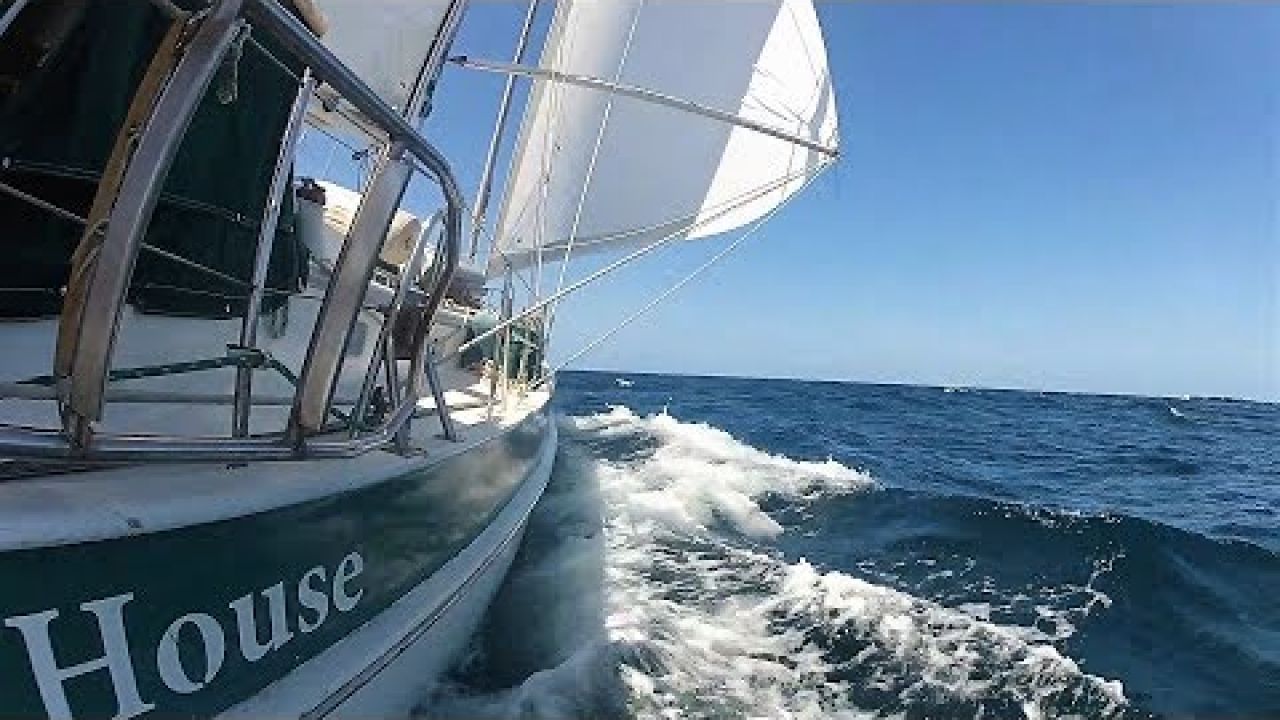
7 Valuable tips that sailing instructors don't show you. These will help to maintain your sailboat and enjoy life on the oceans. Then, some fun footage of th...
Closed Captions (CC):
[Music]
finally we had some waves hopefully the
wind will follow so we can stop this
motoring and put up some sails
[Music]
hello my name is Patrick Childress on
brick house and today I have seven very
important sailing tips for the
long-range Cruiser and certainly number
seven is the most valuable I think even
the most experienced Cruiser will find
from good use than tip number seven and
at the end of this video I put together
some segments on the large wooden
sailboats in Madagascar and the
tremendous amount of weight that they
can carry and about the hard-working men
who
those quotes it's they have all my
admiration in the world for how much
work they put in for very little money
in Madagascar is way past the horizon
and somewhere well over the horizon is
Tanzania Africa and the island of
Zanzibar I love the sound of those names
but first we'll be stopping at the
island of Myatt out here in the
Mozambique Channel so right now let's
get to tip number one
when we are hard on the wind slamming it
to big waves swimming into this port
light and also sometimes on the windward
side of the boat those port lights will
also have a little drip and even though
I've taken silicone grease and you can
also use Vaseline I've rejuvenated the
seal but we can still get small drips
though an anticipation of extreme
weather now I found it's really best
just to take out the screen and install
a storm window this plastic is
quarter-inch thick six millimeters and
it's just some smoked plastic that I
found in a trash pile at a marina so
it's really easy to take out the screen
and put in the storm window
no more leaks tip number two how to keep
the water out of the chained pipe for
the windlass it's pretty easy actually a
nice wad of modeling clay will do the
trick you just squeeze it in around the
chain and have it overlap the base of
the windlass and that'll keep 99% of the
water out the only problem is and very
cold weather the clay will become very
stiff then small rags we'll have to do
tip number three the hatch on the
foredeck how to help that seal on the
inside do its job to keep from big waves
slamming up here and water dripping on
the inside and it's called chinking a
little bit of line to help fill in this
gap slows down the waves so that the
seal can do its job
it just goes around the edge and it's
tied in the back with a simple knot
this is our 4 year old shits cat Lily we
picked her up at the island nation of
pullout when she was just a little
kitten
you know how when a lot whis is always
being put in the lion with each coil but
this is pretty much the standard way of
doing it and stowing a line the problem
is then when you release a line and it
goes through quickly it's all hung up
because the twists are trying to come
out faster than they can untwist so it
gets hung up inside of whatever fitting
it's going through in this case a break
so it's much better to rather than coil
a line to hand a line H a nd hand bring
it over and back and over that way you
don't put those twists in the line when
it runs out they'll run out nice and
clean nice and fair very quickly without
any snags
two-five catching rainwater you don't
need a big area to catch a lot of
rainwater this bimini the water runs
down to the hard Dodger and then
downhill into this gutter which is made
from thin walled PVC cut lengthwise and
attached to the hard Dodger with four
screws and some sealant along the top
edge this line just sits in here has a
knot to help hold it in place and the
water runs downhill
while angled aft and then through
surface tension the water adheres to the
rope and runs right into the bucket
you
number six hard to imagine sitting in a
nice calm anchorage like this big ocean
waves that can come over the side of the
boat and fill the cockpit with water or
even smaller waves they can come over
the side of the boat these were solid
and fixed permanently with twist locks
there could be all kinds of damage these
would have been destroyed long ago but
when big ocean waves come crashing over
the side
they just don't cause any damage they
just get us wet on the inside these side
curtains are held in place with just
little snaps they're of an oval shape so
if you want to pull them apart by hand
pull them up from the bottom oval not
from the side through the top but from
this bottom oval and they come right off
it's probably the most important tip of
all in this whole video because it
contains hundreds and hundreds of other
tips and this is one very important book
that I think every long-range cruising
boat should have onboard offshore
sailing 200 essential passage making
tips by Bill Seaford bill Seaford has
been in the boating business most of his
life he's quite the expert and I don't
care who you are no matter how
experienced you are you read this book
you're going to find something very
unique that's going to help you out in
any long-range cruising situation this
was edited by Daniel spur he actually
all these information into a book format
daniel spirt was an editor at cruising
world for many years and then he became
the big man at practical sailor in r and
practical sailor for many years and
spurs guide to upgrading your cruising
sailboat is another very important book
to have on your long-range cruising sail
boat full of expert information offshore
sailing and spurs guide upgrading your
cruising boat to excellent books to
always keep on your boat here is the
part about the wooden ships
[Music]
[Music]
you guys have this it's a highway
you got my mom
my mother's this it's a highway
if you jump side by side to Jemima
[Music]
photocopy a Papa
that's a sign on tactically
maybe go see everyday
negotiate
[Music]
my record
Musti if I succeed with what you pay
Basava bpm
one of those in my name
[Music]
Uploaded by:
Brick House
•
Category:
Sailing Trip Events (Recreational, Cruising, Concept, Thematic, Disabled, etc)
•
Added on
22 October 2018
•
Location:
Unguja, Tanzania
Description
7 Valuable tips that sailing instructors don't show you. These will help to maintain your sailboat and enjoy life on the oceans. Then, some fun footage of th...
Closed Captions (CC):
[Music]
finally we had some waves hopefully the
wind will follow so we can stop this
motoring and put...
Closed Captions (CC):
[Music]
finally we had some waves hopefully the
wind will follow so we can stop this
motoring and put...