

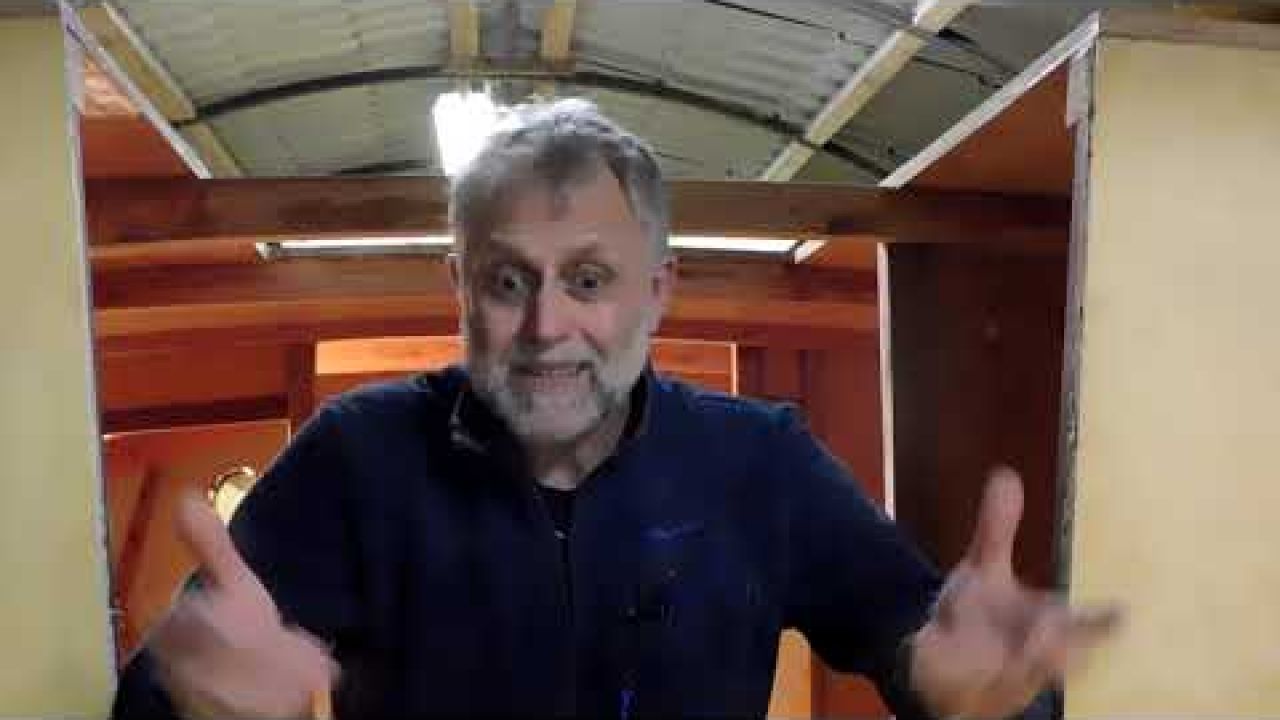
Building a cruising sailboat This is the second part of the installation of the Volvo Penta saildrive engine bed. After the prep work last week, we now fit t...
Closed Captions (CC):
last week on SVT Pacha we started
getting ready to put the engine bed in
the book you cut up five one centimetre
think laminates out of plywood do it up
a plug that's it inside the engine bed
to locate it in the boat making sure
that they fit well inside a bit then
after a number of preparation steps
we've got a hole in the bottom of the
boat that the sound of leg we passed
[Applause]
[Music]
[Applause]
[Music]
[Applause]
[Music]
well hi everyone this is week two of the
the engine bed fitting videos and I will
excuse me taking two videos over fit in
the engine bed but as I said last week
so it's a very important part of the oat
build and when you look at the way J
Benford has designed these boats as I
said again last week I said he's
designed them to be fitted with a an
engine with a sail drive not everybody
goes down that route if you look at what
other builders of dumb Hester for
example has gone to traditional route
with an engine with a with a prop shaft
Stern gland Zebedee went most of the way
around the old navy even all the way
around the world with no engine at all
badger didn't have an engine for a long
long time other people prefer to put in
an outboard well which is a sealed well
that you can fit an outboard in it's
obviously a good option but if you want
to go down the way that the Jay Binford
design these boats to be that is to fit
a sail Drive then you've got to do
something like what I've done here an SS
what I've tried to do and I thought it
was important to take these two videos
to show you how I fit in this engine bit
so you remember last week as you've just
seen we've got as far as cutting the
hole in the bottom of the boat and we've
carried on this week and those five
laminates that I cut the one centimeter
thick laminates going up to 5
centimeters obviously of a plug for the
engine bed they were glued in position
nailed in position
with the bronze silicone bronze grip
fast nails epoxy glowed
[Music]
[Applause]
[Music]
[Applause]
[Music]
[Music]
you
you
you
[Music]
[Music]
you
and then I once overall in
I fire blast them too just in case
there's any water leakage that water
couldn't soak into there and get some
rock going so they're all epoxy sealed
and glassed particularly around the the
end grain
[Music]
[Music]
[Music]
[Music]
you
and then I spread I spread some fill
around them so she got the conical shape
to it and in put some some wet epoxy
glue on there I'd ground down the inside
and the outside of the engine bed
ground-up jolco off and roughed up a
surface wet epoxy on the plug sat the
engine bed down over it and left it
there to dry
you
you
you
[Applause]
and then the next stage is to fiberglass
around the outside of the engine bed
around the well whether that the soil
drive goes through around the well
that's the engine build various layers a
fiberglass went in there and you end up
with six layers on put in a narrow so
ten centimeter wide six ounce cloth then
I went round with a 15 centimeter wide
six ounce cloth twice and then I went
around three times with a very heavy
cloth it's double that so it must be 12
ounce cloth went around there three
layers of that so everything this was
some pretty heavy fiberglass work in the
end
[Music]
and finally on top of all of that I put
a filler of thickened epoxy epoxy with
with microfibers
so that's how glued in she feels really
solid I last week I talked about a belt
and braces and braces approach so the
huge sub which is the belt which is the
braces but we've got the plug that
locates the engine bed the engine bed is
in fiberglassed in position and the
final securing of it will be that when I
built the engine now adapter plates I
built them to take bolt on steel pieces
that will bolt through to the floors of
the boat so the engine mount plates the
engine bed itself will be bolted down
physically with these steel plates to
the to the floors as well so I'm
confident than that all of keeper in
position you do have to think that in
the onion Oh in the unfortunate event of
a knockdown you could be upside down the
whole engine could be hanging upside
down in the boat and also it would go
over with some force so you've got the
g-force on top of that the mass of the
engine plus the g-force so that melt has
got to be strong enough to hold that
these guys gotta be pretty strong
something I say steel plates poker
through the floors and then I'm gonna be
happy with it
I've just finished putting the filler
around which is my final layer tomorrow
once this is dry tomorrow I'll put there
just a coat of clear epoxy over it and
then when that's dry
I've got epoxy primer a couple of coats
of that in bills paint and we're ready
to get the engine in so that's where we
are well there we go
thanks for watching usual YouTube stuff
and we'll be moving onto something new
next week we may even be putting the
engine in place you'll be very exciting
not the sale drive yet because I'm
nothing
hate have enough height underneath the
boat get the so drivin but we'll get the
engine in place prop it up on a piece of
wood quite likely to do that next week
that'd be a great thing cuz it gets the
engine into the engine room frees up the
galley area progress
[Music]
and fixes sunsets
never say tell me when you go into the
decisively what's your destination
tell me about we can move together where
revenge is about running
days such as
[Music]
you
Uploaded by:
SV Tapatya
•
Category:
Boat Building/Maintenance/Repair, Instructional
•
Added on
11 April 2019
•
Location:
Conwy, Wales
Description
Building a cruising sailboat This is the second part of the installation of the Volvo Penta saildrive engine bed. After the prep work last week, we now fit t...
Closed Captions (CC):
last week on SVT Pacha we started
getting ready to put the engine bed in
the book you cut up five one...
Closed Captions (CC):
last week on SVT Pacha we started
getting ready to put the engine bed in
the book you cut up five one...